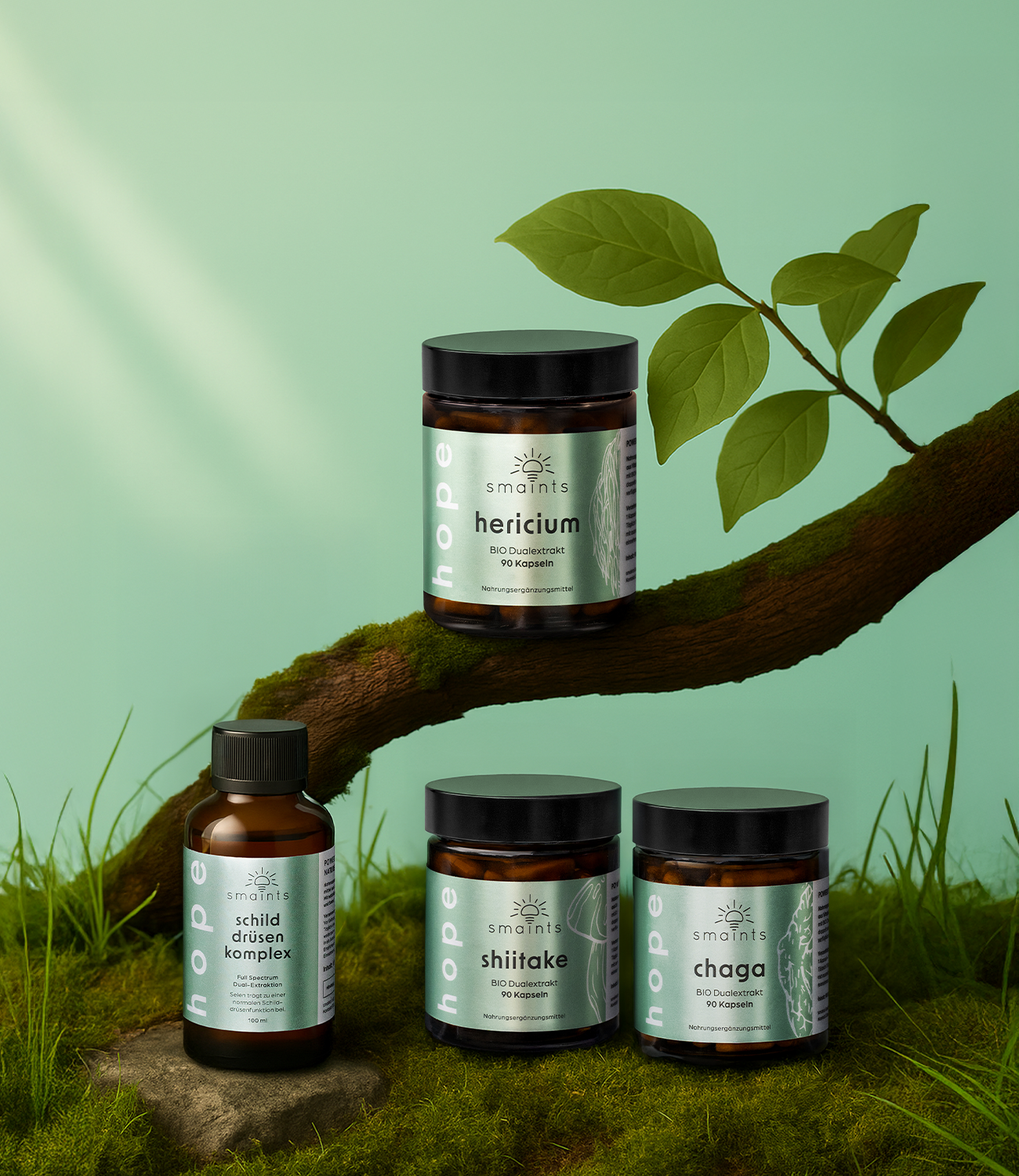
Natural medicine is as diverse as nature itself. However, many people are only familiar with phytotherapy, the use of medicinal plants for prevention or to support the treatment of illnesses. Mycotherapy, or treatment with fungi (myco), is not particularly widespread in this country. We want to change that, because we are convinced of the natural power of fungi.
Mycotherapy is also known as medicinal mushroom therapy. The term is relatively new and likely originates with the mycologist Jan Ivan Lelley (born 1938). However, the underlying knowledge is much older. Medicinal mushrooms have been used for centuries, perhaps even millennia. It is certain that people ate mushrooms in the Stone Age. But whether they were already using them specifically to treat illnesses at that time is unclear. Ötzi provides some clues. The Neolithic man carried two fungi with him: tinder fungus and birch polypore. It is believed that he used the birch polypore to treat digestive problems as early as 5300 years ago, as evidence of a stomach ailment is known.
Many mushrooms used in mycotherapy today originate from Asia, where traditional Chinese medicine accumulated and passed down a wealth of knowledge about fungi. In Europe, the situation is different. While people used mushrooms relatively frequently for therapeutic purposes until the Middle Ages, medicinal mushrooms have largely been forgotten since the advent of modern medicine. This is unfortunate, as mycotherapy today does not claim to cure and is in no way a replacement for conventional therapy. Rather, it should be understood as a complement. Mushrooms are also used for general strengthening and prevention, because, unlike pharmaceuticals, medicinal mushrooms are not intended to have a specific effect. This means they work on the entire body.
Traditional Chinese Medicine (TCM) consists of five pillars, one of which is diet. Edible mushrooms such as shiitake, oyster mushrooms, and wood ear mushrooms are therefore frequently included in the diet. Since mushrooms are generally rich in nutrients such as vitamins, amino acids, and minerals, they contribute to health for this reason alone. However, the constituents of medicinal mushrooms are attributed with further effects. They are said to strengthen the liver, the immune system, the heart, and digestion, for example. Mushrooms have long been used in traditional medicine as teas, tinctures, or extracts. In TCM, approximately 100 different mushrooms are described for therapeutic use. Today, medicinal mushrooms continue to play a significant role in China and throughout Asia. Some are even approved as medicines and thus represent not only traditional but also modern medicine.
Incidentally, contrary to popular belief, medicinal mushroom powder is not a traditional form of administration. Learn more here → What is actually better: medicinal mushroom powder or extract?
In mycotherapy, knowledge from Traditional Chinese Medicine, ancient Aztec traditions and their sacred mushrooms, European monastic medicine, global findings on medicinal mushrooms, and modern research into their effects are combined. Therefore, a wide variety of medicinal mushrooms can be selected for mycotherapy. Applications range from strengthening the immune system and treating allergies to alleviating stomach or intestinal discomfort. Some of the best-known mushrooms are:
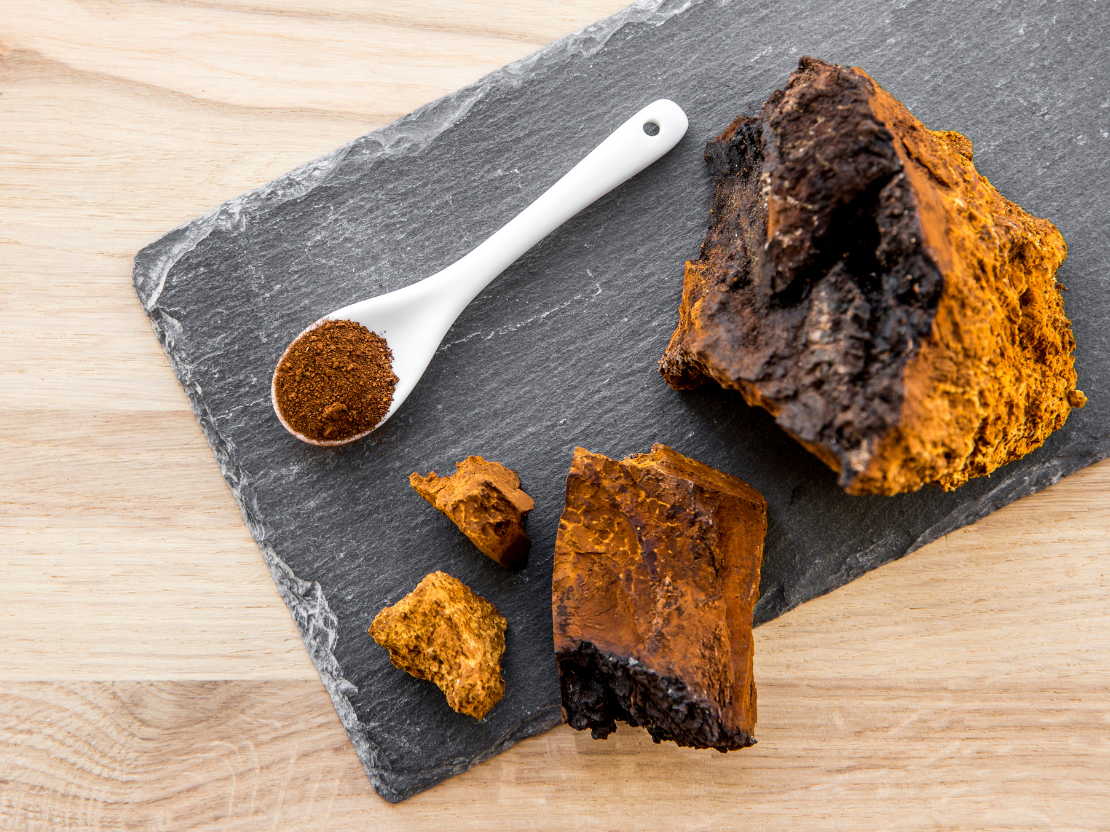
Chaga (Inonotus obliquus, Schillerporling)
Maitake (Grifola frondosa, common hen-of-the-woods mushroom)
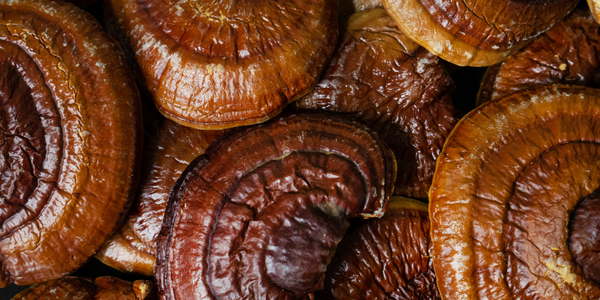
Reishi (Ganoderma lucidum)
Agaricus blazei murril (ABM)
Shiitake (Lentinula edodes)
Cordyceps (caterpillar fungus)
Hericium (hedgehog beard, lion's mane)
Auricularia (Judas Ear, Mu Err)
Pleurotus ostreatus (Oyster mushroom, Ping Gu)
Squirrel hare (Polyporus umbellatus, Zhuling)
Fuling (Poria alba)
Coprinus comatus (asparagus mushroom)
Enoki (Flammulina velutipes)
You can learn more about medicinal mushrooms, their ingredients and effects in our blog .
Mycotherapy serves to prevent illness, generally strengthen the immune system, and promote youthful activity, making it beneficial for generally healthy individuals. However, the healing power of mushrooms can also be utilized in cases of existing illnesses. In such cases, you should discuss the possibilities with an experienced mycotherapist. If you are already taking medication, medical advice may also be necessary to rule out any interactions. When combined and applied correctly, medicinal mushrooms can support medical treatment or reduce its side effects. You are likely familiar with a similar use of medicinal plants. For example, fennel tea or Hericium are used as complementary treatments for stomach and intestinal problems.
In principle, medicinal mushrooms can also be taken by children, but the dosage should be adjusted. Pregnant and breastfeeding women can also use most types of mushrooms. You can get detailed advice on this topic from a mycotherapy practitioner. Medicinal mushrooms don't only affect the human body, however. There are also therapists who specialize in treating animals.
Conclusion : Anyone open to preparations with natural ingredients can try mycotherapy. Of course, if you are allergic to any of the ingredients, you should discontinue treatment. Interactions between the mushroom and your medication are possible. However, even if this applies to your medication, therapy with medicinal mushrooms is still possible. There are so many different types of mushrooms that it's often possible to switch to a different one.
If you've decided to consult a mycotherapist, finding a suitable practitioner can be quite challenging at the moment. This is because the therapy isn't yet widespread. Few holistic medical practices offer mycotherapy alongside other naturopathic treatments. You can also find practitioners at naturopathic clinics. Some pharmacies also offer advice on mushrooms.
If you live in Switzerland, check out thislist from the Swiss Society for Medicinal Mushroom Science (GFVS). You can find well-trained individuals there. In Germany, the equivalent is the website Vitalpilzexperte.de . However, they don't yet have a list, but they do offer written mycological consultations.
We, the founders of Smaints, are also TCM mycotherapists and completed our training at the GFVS in Switzerland. Therefore, you can contact us with any questions about using our products to receive a qualified answer. However, we cannot offer comprehensive mycotherapy. Therefore, we have some tips on how to identify a good complementary medicine for your mycotherapy:
The term "mycotherapist" is not legally protected. Therefore, ensure that the practitioner has received reputable training.
Ideally, the therapist has sound medical knowledge and can therefore assess the limits of the therapy.
Anyone who promises you a miracle cure (for example, for cancer) through mushrooms can endanger your health if you therefore forgo medication.
Scientific studies exist regarding the healing properties of mushrooms. Is mycotherapy based solely on traditional knowledge or also on these studies? We recommend incorporating the studies.
There are significant differences in the quality of medicinal mushrooms. Our tip: Opt for high-quality products. Preparations that come directly from China are often contaminated.
What other services are offered in practice? Those who offer too wide a range of services may simply be following trends and are not true experts in the field.
Medicinal mushrooms have nothing to do with magic mushrooms. If you are promised psychoactive substances, such as those found in the Psilocybe mushroom, this is illegal and can potentially damage your liver. It has no connection whatsoever with any positive health effects.
If you're considering training yourself, you should have a genuine interest in medicinal mushrooms and at least a basic understanding of the subject. This will make it easier to grasp their beneficial properties and contextualize the numerous studies (mostly in English). You can attend a basic training module and then complete specialized advanced training courses. We completed our training with the Swiss Society for Vital Mushroom Science and can recommend it. Other providers also offer good courses. Before choosing, research the modules included, reviews, and the instructors' expertise.
Until you begin your training, you will always find up-to-date information about mushrooms and their ingredients on our blog.

Sources:
https://www.vitalpilzexperte.de/
http://www.medizinalpilze.de/mykotherapie_und_mykommolekulare_therapie.htm


Organic functional mushrooms
from Europe

Scientifically developed - tradition meets modernity

Suitable for everyday use & delicious

Independently laboratory tested
in Germany