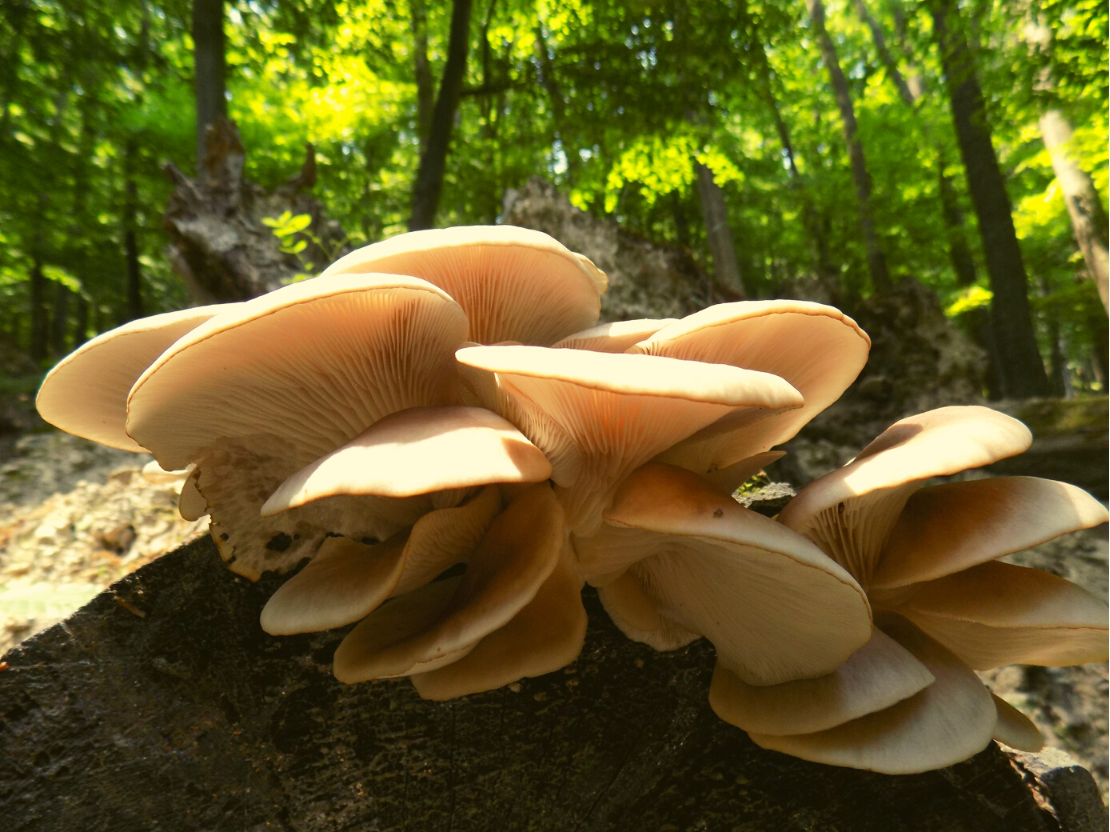
We've long relied on the natural powers of medicinal plants like sage, valerian, and arnica. But medicinal mushrooms are something completely new to many. Yet they've been used in traditional medicine for just as long as plants. We'll show you how you too can use medicinal mushrooms.
The term "medicinal mushroom" is not precisely defined. However, it is actually quite self-explanatory. Medicinal mushrooms are mushrooms to which healing properties are attributed. These can also include edible mushrooms such as shiitake. Traditionally, they are mostly taken for disease prevention and general strengthening. The terms "vital mushroom" and "medicinal mushroom" are synonyms.
Fungi are neither plants nor animals, but belong to their own kingdom. Therefore, strictly speaking, medicinal mushrooms are not part of herbal medicine. Mycotherapy describes the therapeutic use of fungi. Macroscopic fungi, i.e., large fungi, are most commonly used in this context.
Mushrooms are highly valued in natural medicine. But even modern medicine cannot do without them, although they are administered not as the mushroom itself, but as isolated substances. The healing effects of mushrooms were discovered independently all over the world. Today, medicinal mushrooms are primarily known from traditional Chinese medicine, but they were also valued early on in Europe, America, and Africa.
Traditional Chinese Medicine (TCM) is a comprehensive system that aims to identify and correct imbalances in the body. It addresses both pre-illness and existing conditions. TCM is generally divided into five methods:
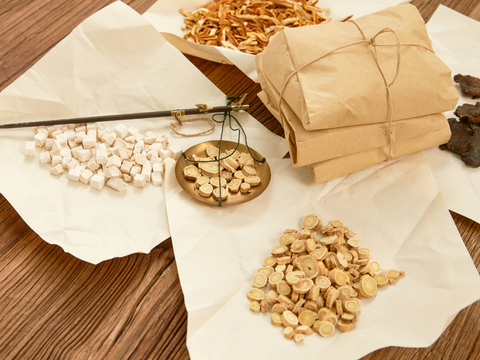
Medicinal mushrooms can be used either in diet or in herbal medicine. They are usually boiled into a decoction or processed into a powder. In Traditional Chinese Medicine (TCM), the mushrooms, like the herbs, are very individually tailored. This means that each patient receives a different composition and dosage. This is one of the reasons why a scientific evaluation through studies is relatively difficult.
Typical mushrooms from traditional Chinese medicine include:
The first known antibiotic, penicillin, comes from fungi of the genus Penicillium. Today, we know of a whole range of active ingredients from this genus that are used in conventional medicine. But these are not the first fungi known for their healing properties in Europe. The laxative effect of the larch polypore has been known since antiquity. Fungi were also administered for respiratory distress, tuberculosis, and fever. In the Middle Ages, treatment with fungi was very popular. Stinkhorn, wood ear, and tinder fungus were all used.
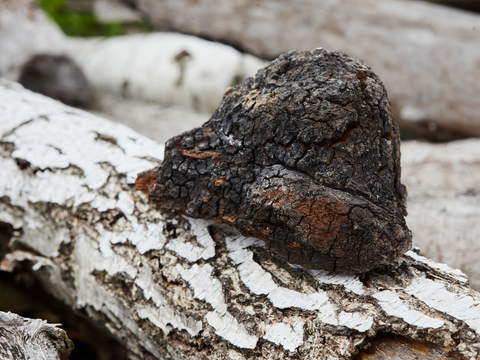
The chaga mushroom is now one of the most popular medicinal mushrooms worldwide. It also originates from Europe. The mushroom grows best in colder regions such as Finland or Russia, where it has been used since the 12th century to generally strengthen the immune system.
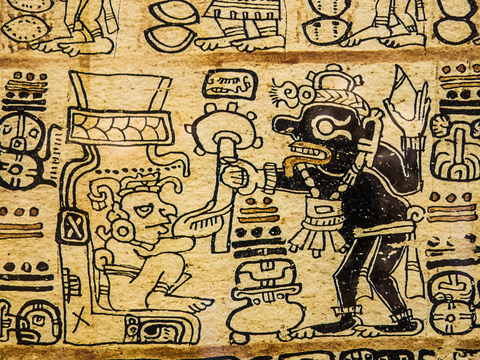
The Aztecs called mushrooms "little saints" because of their positive health effects. Other advanced civilizations, such as the Maya, also revered them. Although attempts were made to destroy this ancient knowledge during the European conquest, we still know quite a bit about their traditional uses. The Mexican liberty cap mushroom (Psilocybe), which is traditionally used in shamanic ceremonies, is currently enjoying renewed popularity. This mushroom has psychoactive effects and is therefore illegal in Germany. Strictly speaking, it is not a medicinal mushroom, as it does not support bodily health.
Modern mushroom therapy combines time-honored knowledge from various continents with contemporary research findings. Studies have already demonstrated some positive effects of mushrooms in cell and animal models. However, clinical trials in humans are still scarce, which is why medicinal mushrooms are not classified as drugs. You can purchase them as dietary supplements in the form of capsules, powders, or extracts.
Many doctors are skeptical of medicinal mushrooms. However, some are open to these new methods. They use the mushrooms as a complementary therapy alongside conventional treatment. This is even occasionally possible in cancer cases. If chemotherapy is poorly tolerated, the mushrooms can be used to restore balance to the body. There is no negative impact on cancer therapy if high-quality products are used. Nevertheless, the use of medicinal mushrooms should always be discussed with your doctor and not undertaken as a self-medication. Furthermore, you should always keep in mind that they cannot cure cancer. They are merely a supportive measure to therapy.
In the following overview, we would like to introduce you to the different types of mushrooms and their potential uses. Please note that these uses are not a recommendation for self-medication. Current research is mostly based on experiments conducted in test tubes or on animals. This cannot always be directly applied to the human body. You can find detailed research on specific mushrooms by clicking on their respective names.
Cordyceps sinensis (caterpillar fungus)
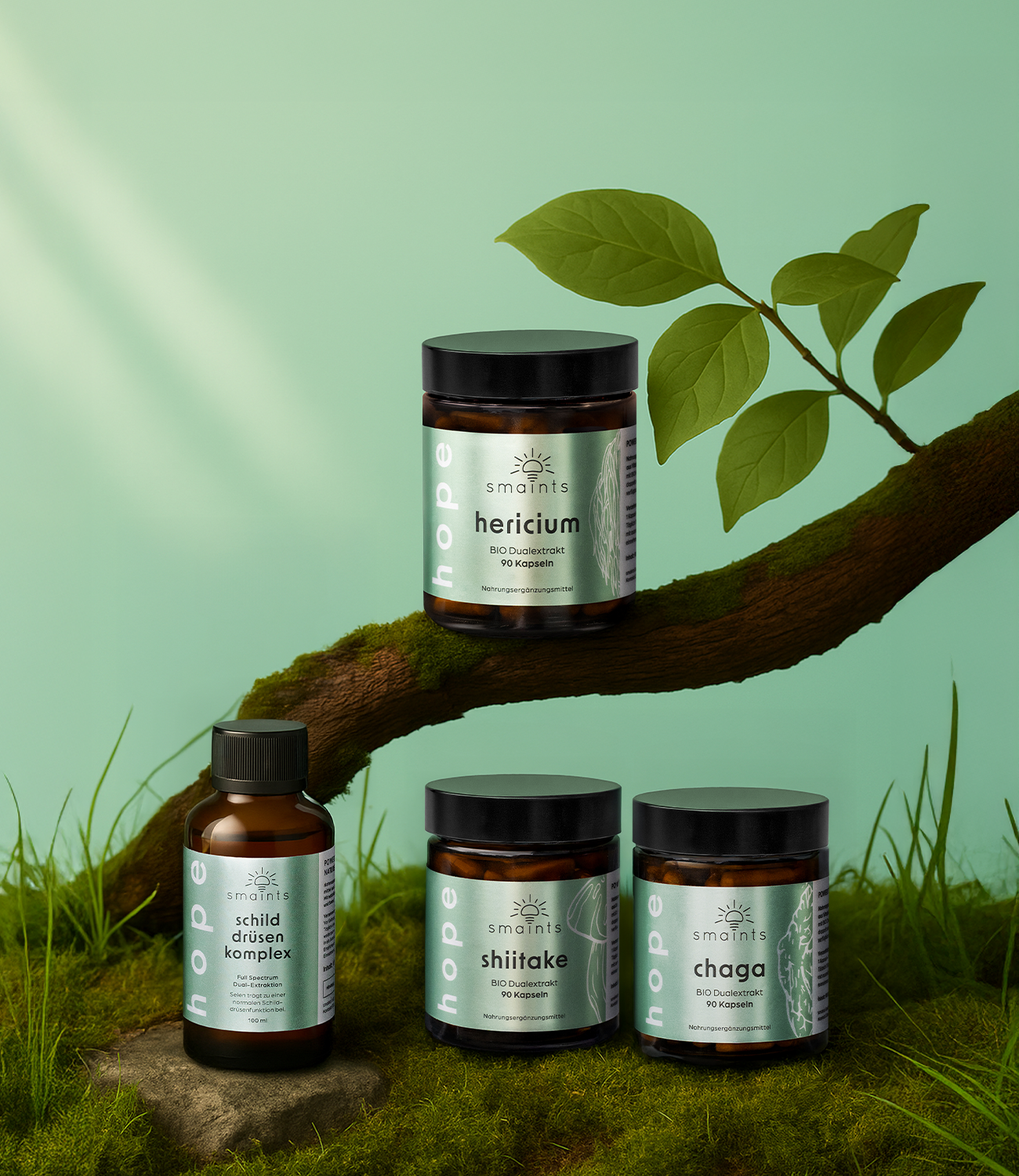
Hericium (Hedgehog's Mane / Lion's Mane)
Agaricus blazei murrill (ABM / almond mushroom)
Shiitake (Lentinula edodes)
Chaga (Slate Schillerporling / Inonotus obliquus)
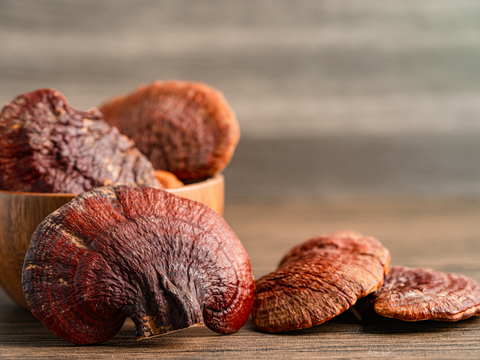
Reishi (Ling Zhi / Shiny Lackporling / Ganoderma lucidum)
Maitake (Grifola frondosa)
Judas Ear (Mu-Err / Auricularia auricula-judae)
Recommended reading: Medicinal mushrooms: Their effects have a long tradition
Unlike conventional edible mushrooms, medicinal mushrooms more frequently elicit expressions of gratitude for their health benefits. We often receive legitimate questions, which we would like to address in more detail.
As with medicinal plants, side effects or interactions with other medications are theoretically possible, but very rare. Consuming shiitake mushrooms can lead to a condition called shiitake dermatitis. This is a skin reaction that can also occur with cooked or fried mushrooms. Most other mushrooms are generally well tolerated. Occasionally, however, they can cause gastrointestinal discomfort.
However, interactions with medications are somewhat more common. If you need to take anti-inflammatory medications (this includes some painkillers and cortisone), then you should not use beta-glucan extracts from mushrooms. Therefore, always inform yourself about possible drug interactions before taking medicinal mushrooms.
You may have heard that wild mushrooms were contaminated with radioactivity after the Chernobyl reactor accident. This is still true for mushrooms in some regions today. This example shows that mushrooms act like a filter: they are able to absorb many harmful substances, such as heavy metals, from their environment (air, soil, water) and pass them on to us. Furthermore, there is a risk of contamination with dangerous molds if the products are not stored properly. Therefore, the answer to the question of possible contamination is: yes, it is possible. For this reason, you should opt for mushrooms from Germany or the EU, as there are strict regulations for the production of food supplements in these countries. Products from China or Asia are more likely to be contaminated. Sometimes, mushroom powders or extracts are also adulterated with rice flour or similar ingredients. Therefore, for the sake of your health, ensure you choose truly high-quality, transparent, and laboratory-tested products.
The effects of mushrooms stem from a multitude of substances. Beta-glucans, antioxidants, phytochemicals, and vitamins are just a few examples. However, some of these substances are poorly digested and absorbed by our bodies. To still benefit from the full spectrum of effects, technical methods exist to detach the ingredients from cell structures that are responsible for their poor bioavailability.
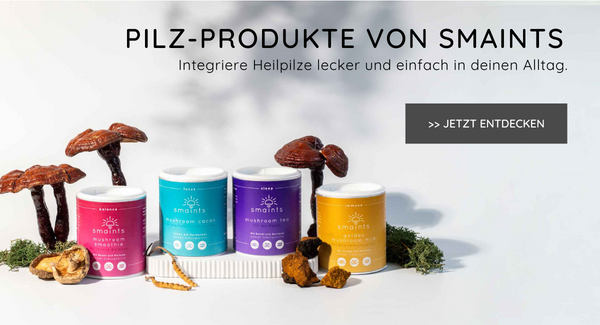
An extract obtained through dual extraction offers you the best possible spectrum of effects and good bioavailability. At smaints, we use this method for all our products. There are many opinions on whether mushroom powder or extract is better. We have consciously chosen extracts because of their higher concentration of active ingredients and better bioavailability. Thanks to modern and innovative methods, a full spectrum of active ingredients is possible.
In principle, you should follow the manufacturer's dosage instructions. They recommend a daily amount that is usually well tolerated. Especially at the beginning, you can also start with a lower dose, as the body sometimes needs an adjustment period to get used to the new substances.
To achieve optimal results, you should take the supplements daily for at least three months. Switching between or combining different mushrooms is usually more effective than increasing the dosage.
For several years now, medicinal mushrooms have been gaining popularity, even though they have actually existed for centuries around the world. Their beneficial effects have been known for just as long. Therefore, it's not surprising that medicinal mushrooms are part of traditional medicine in many cultures. Each mushroom has a different effect and thus its own specific applications. Although mushrooms and their constituent substances are the subject of current research, their positive effects are not 100% confirmed in humans. However, there are promising studies on cell lines and animals, expert opinions, and numerous positive testimonials (including from our customers at smaints).
Medicinal mushrooms are therefore not medicines, but dietary supplements, and there are several things to consider when using them: Side effects and interactions are possible, especially when taking other medications. Before taking them, inform yourself about potential interactions with any medications you are currently taking. Furthermore, the mushrooms can be contaminated with pollutants – mushrooms are natural "filters" and absorb everything from their environment. Therefore, ensure you choose the best quality products from reputable manufacturers. The bioavailability of the products also plays a crucial role. For example, dual extraction allows for optimal absorption of the ingredients, unlike simple mushroom powders (just dried and ground mushrooms). Correct dosage is equally important. You should find dosage recommendations on every product.
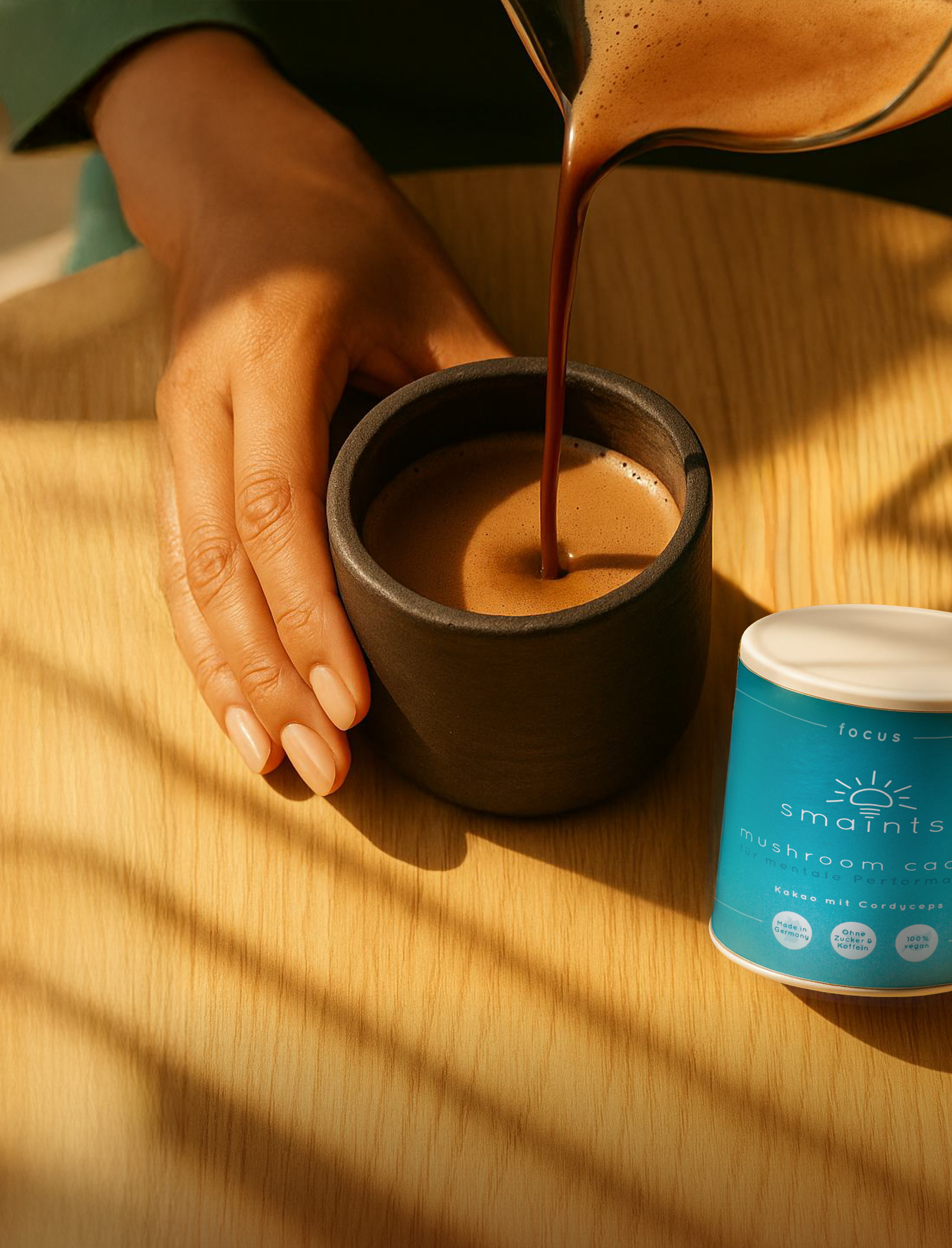
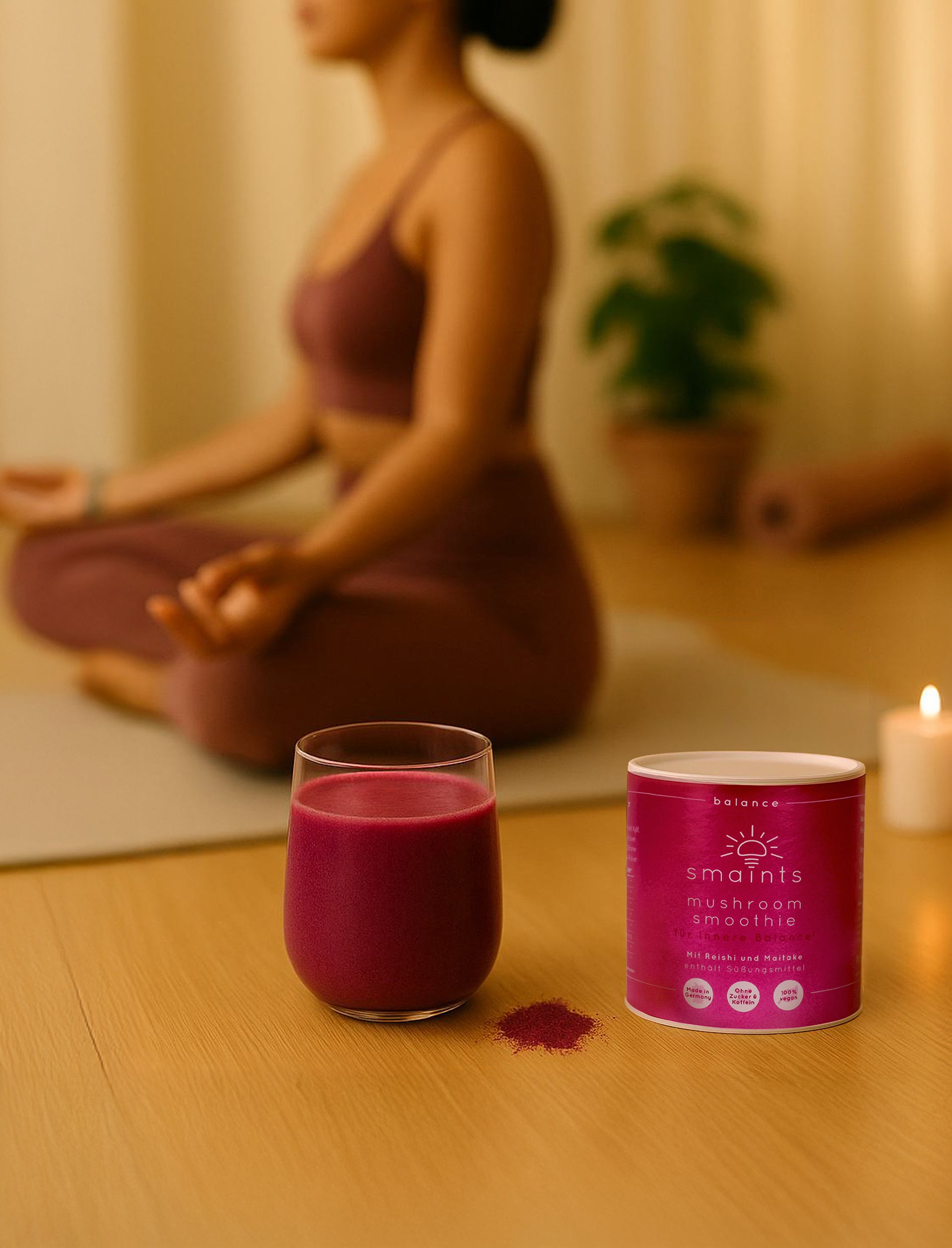
Have the ingredients in Cordyceps, Chaga mushroom, and other mushrooms convinced you? Then take a look in our smaints shop. There you'll find convenient liquid extracts and delicious mushroom drink powders like our Golden Mushroom Milk or our Mushroom Cacao 😋
Sources:
http://www.medizinalpilze.de/was_verstehen_wir_unter_mykotherapie_.htm
https://flexikon.doccheck.com/de/Penicillin
https://www.gesundheit.gv.at/gesundheitsleistungen/komplementaer-medizin/tcm
http://www.medizinalpilze.de/geschichte_der_mykotherapie.htm
https://www.ndr.de/ratgeber/gesundheit/Wie-Heilpilze-helfen-koennen,heilpilze100.html
http://mrca-science.org/index.php/de/pilze-heilwirkung-anwendungsgebiete
https://www.bfr.bund.de/cm/343/gesundheitliches_risiko_von_shiitake_pilzen.pdf
https://examine.com/supplements/
https://www.dgfm-ev.de/pilzesammeln-und-vergiftungen/heilpilze
http://alquimiahealingarts.com/wp-content/uploads/2020/12/Medicinal-Mushrooms_-A-Clinical-Guide-2nd-Edition.pdf

Beantworte 6 kurze Fragen zu deinen Zielen und deinem Alltag.


Organic functional mushrooms
from Europe

Scientifically developed - tradition meets modernity

Suitable for everyday use & delicious

Independently laboratory tested
in Germany