
In today's world, it's not so easy to work with full concentration for extended periods. Unfortunately, there are many factors that distract us. Perhaps the phone rings, the smartphone sends a message, or a chatty colleague interrupts our train of thought.
In this guide, we would like to briefly explain the unique aspects of Deep Work. The Deep Work method allows you to enter a conscious state of concentration, enabling you to fully focus on your task.
For increased productivity, it's crucial to focus your attention precisely on one thing. This not only allows you to fully utilize your potential but also helps you reach your goals faster. A further advantage is that this approach doesn't even push you beyond your limits. Especially in everyday work, you're frequently confronted with mentally challenging situations. It's comparable to a sporting competition. Unfortunately, our work is often hampered by distractions.
Many scientists have discovered and confirmed that humans are simply not designed for multitasking. For example, if you're interrupted while working, you essentially never pick up where you left off. This is because your brain needs a certain amount of time to return to a focused and productive state. For this reason, you should take a closer look at Deep Work.
First, let's look at the term "deep work." In German, this roughly translates to "tiefe Arbeit" (deep work). It means that you can really immerse yourself in your work.
This is a special state of concentration, in which you are deliberately guided into a tunnel vision. You focus your thoughts completely on one thing. You dedicate your full attention to it.
It's important that you block out all distractions here. Deep work can be described as a special skill that allows you to dedicate yourself to complex tasks in a very short time and then achieve the best results.
American professor Cal Newport observed that our modern work habits are disrupted far too easily. While our brain is a powerful tool designed for complex and creative processes, it is quickly interrupted. Instead of deep work, we then engage in so-called shallow work.
Deep work involves demanding and professional tasks that require a high level of concentration, free from distractions. You approach these tasks in a way that demands your full intellectual potential. This effort allows you to achieve optimal added value and improves your ability to concentrate.
Shallow work refers to tasks that are less challenging and can often be easily completed on the side. Examples include:
These tasks essentially create no added value and are easily reproducible. Several of these simple activities can even be combined. For example, you can fill your printer with paper while your computer is performing an update. In contrast to deep work, shallow work essentially "wastes" valuable working time.

Focused work is crucial for efficient task completion. To help you better integrate deep work into your workflow, we will introduce you to the most important methods and exercises.
To be able to focus on the important aspects of your work in peace and quiet, you should withdraw from the hustle and bustle around you. It's important that you complete your tasks in an undisturbed environment without major distractions. You can work much better in peace and quiet.
Take sufficient time for this. Complex tasks usually take longer, so you should definitely consider dedicating an entire workday to it. These deep work phases are also familiar to exam candidates during important learning and exam preparation.
It's also important that you block out all distractions. Therefore, banish your smartphone for this time, forward your phone to other colleagues, and don't check your email.
Unfortunately, in many cases it's not possible to completely isolate yourself. If you can't get everything done in one go, you should at least clear yourself some time slots. During these times, your focus should be on concentration without distractions.
It's best to set aside specific times for this, perhaps early in the morning or late in the afternoon. Hopefully, things won't be too busy during these times, allowing you to focus on your task undisturbed. A daily plan, divided into individual work blocks, can be helpful for this kind of deep work.
You need to prioritize your work. Always ask yourself whether it's worth spending time on a less important task, or whether you should focus on the important things right from the start.
Professionals prioritize their tasks. They assign percentages, so that important tasks receive higher percentages than less important ones.
For example, if you receive an email during deep work asking you to offer a computationally intensive solution, postpone replying until you've completed the important deep work task. If a prompt reply is expected, it's perfectly acceptable to reply that you don't have time for it right now.
Journalists have to perform at their best in a very short time. They need to react quickly so that important deadlines can be met. You too can train your brain to function like a light switch.
For example, you could simulate a deadline in the morning by which you want to have your important work completed. It takes some practice to set specific goals within a very short timeframe. This might not work right away. Not everyone is a journalist.
On your path to focused deep work, it's important to take regular breaks. Your brain definitely deserves a rest now and then. This allows you to recharge and be well-prepared for the next phase.
Even after a deep work session, you should reward yourself. This doesn't have to be with a gift. The focus here is on relaxation. For example, you could do some exercise in the evening, meet up with friends, go for a walk, or take a relaxing bath.
Those who have exerted themselves during deep work should then regenerate their brain.
Nootropics are natural plant substances or dietary supplements that positively influence concentration. They are not medications or drugs and are therefore freely available. Their effects are based on various natural mechanisms of action. Ginkgo, ginseng, and colin are among the best-known substances, which also have positive effects on memory and neural pathways. Numerous studies have demonstrated the beneficial effects of these plant substances.
Which substances are best suited for you can only be answered on an individual basis. However, nootropics are completely safe in the normal recommended daily doses.
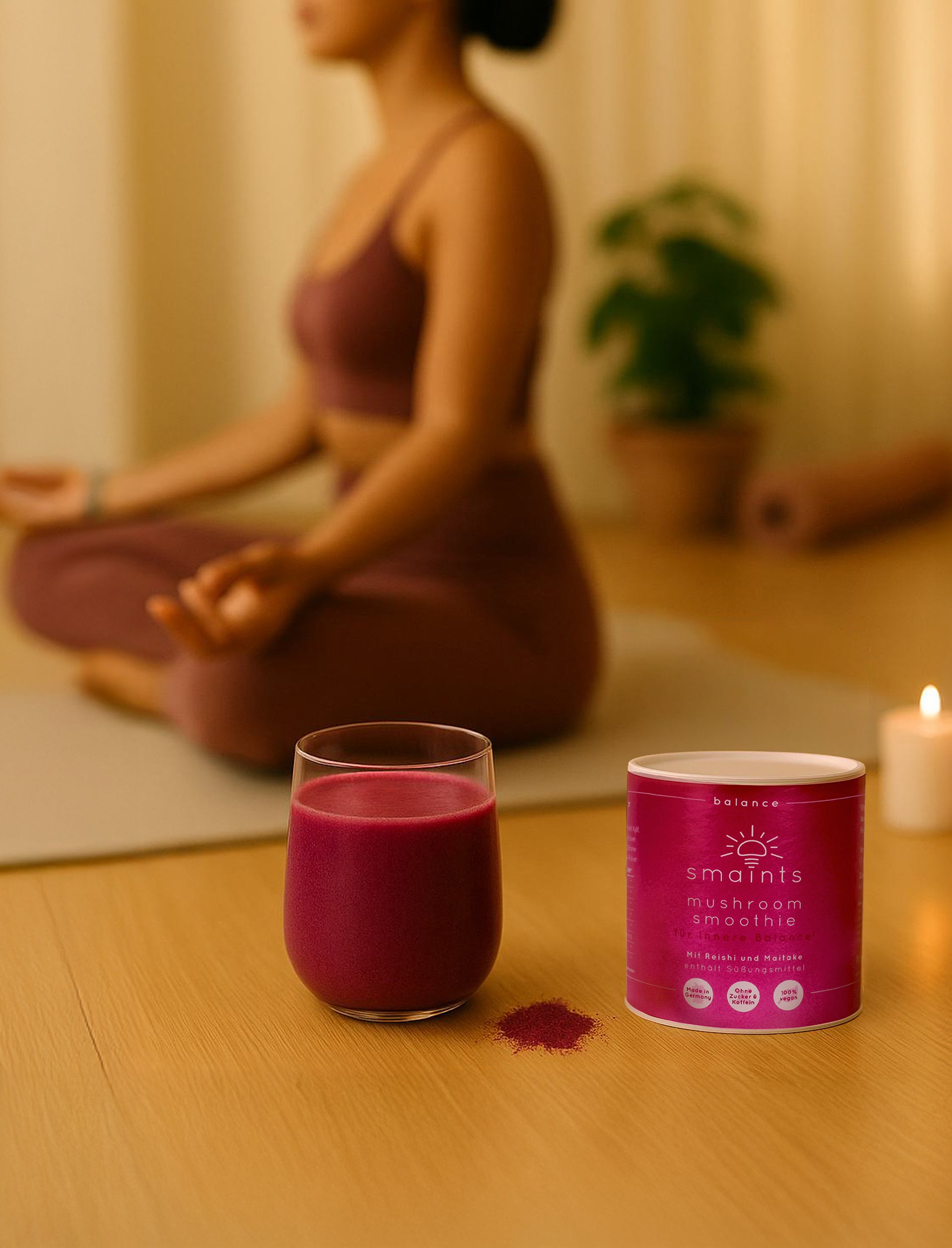
Our biohacking tip: smaints Mushroom Cacao !
Cocoa, a serotonin booster, is combined with the medicinal mushroom Cordyceps , which supports oxygenation in the body and brain. It also contains ginkgo, CDP-choline, and vitamin B5. Perfect for mental performance! :-)

Deep work represents the highest level of concentration on a specific task. Therefore, it's important that you prepare your body not only mentally but also physically. Deep work training is understood to be a combination of cardio and relaxation exercises.
Interestingly, a Deep Work Workout is not understood as isolated work, but rather as a power program that specifically targets deeper muscles.
Inspired by the Chinese concept of Yin and Yang, the training is based on the five elements:
First, you train barefoot. You also regularly alternate between tension and relaxation exercises. Such training is usually divided into 7 phases.
In Phase 1, participants relax and perform simple breathing exercises. This helps you switch off from everyday life even more effectively. Phase 2 is the warm-up. Here, the muscles are tensed and then relaxed. In Phase 3, you get into a push-up position. You alternately bring your knees forward. This is called the running phase.
Phase 4 is the first momentum phase, which is an interval training session. This really gets your circulation going. Strength training and relaxation alternate during this phase.
Phase 5 marks the start of the second phase of the workout. This phase consists of endurance exercises for the cardiovascular system. In Phase 6, you sprint in place. All participants are expected to give their all one last time. Phase 7 is the rest phase, which concludes with breathing exercises.
All these exercises ensure an efficient workout, but at the same time they help to better prepare you physically for upcoming tasks.


Organic functional mushrooms
from Europe

Scientifically developed - tradition meets modernity

Suitable for everyday use & delicious

Independently laboratory tested
in Germany