
Shortness of breath, coughing, wheezing – asthmatics know these symptoms all too well. This chronic condition can usually be well managed with medication. Natural remedies and home remedies can provide additional support. Learn here how you can treat asthma naturally.

Our tips and tricks strengthen your immune system, replenish your vitamin stores, loosen mucus, and generally help with asthma. However, they do not replace your asthma medication. Regular checkups with your doctor are still advisable. Together, medication and natural treatments form a powerful team. Here's how:
Ginger has become particularly popular in recent years as a spicy superfood. During cold and flu season, the root is a natural aid in keeping viruses and bacteria at bay. Ginger is also said to be helpful for stomach problems. In Traditional Chinese Medicine, ginger is also used for asthma and other respiratory illnesses, as it is believed to relax the airways and have anti-inflammatory properties. This was demonstrated in a 2013 study at Columbia University. Researchers isolated four phytochemicals from ginger and tested them in a laboratory experiment. The results showed that some of these substances lead to a rapid relaxation of the respiratory muscles. This could contribute to the relief of asthma.
You can easily incorporate ginger root into your daily routine. It's especially good in soups, smoothies, ginger shots, and golden milk . Feel free to check out this recipe as well.

Asthma and stress are closely linked. If asthmatics suffer from emotional stress, it can trigger asthma attacks or worsen existing symptoms. Therefore, relaxation exercises are also part of a complementary natural therapy. There are many ways to find more relaxation in life. Ultimately, you have to find out for yourself which method works best for you. Here are a few ideas:
You can also improve your stress resilience with adaptogens. You can find out exactly what they are and how they work here → The adaptogenic effect of medicinal mushrooms
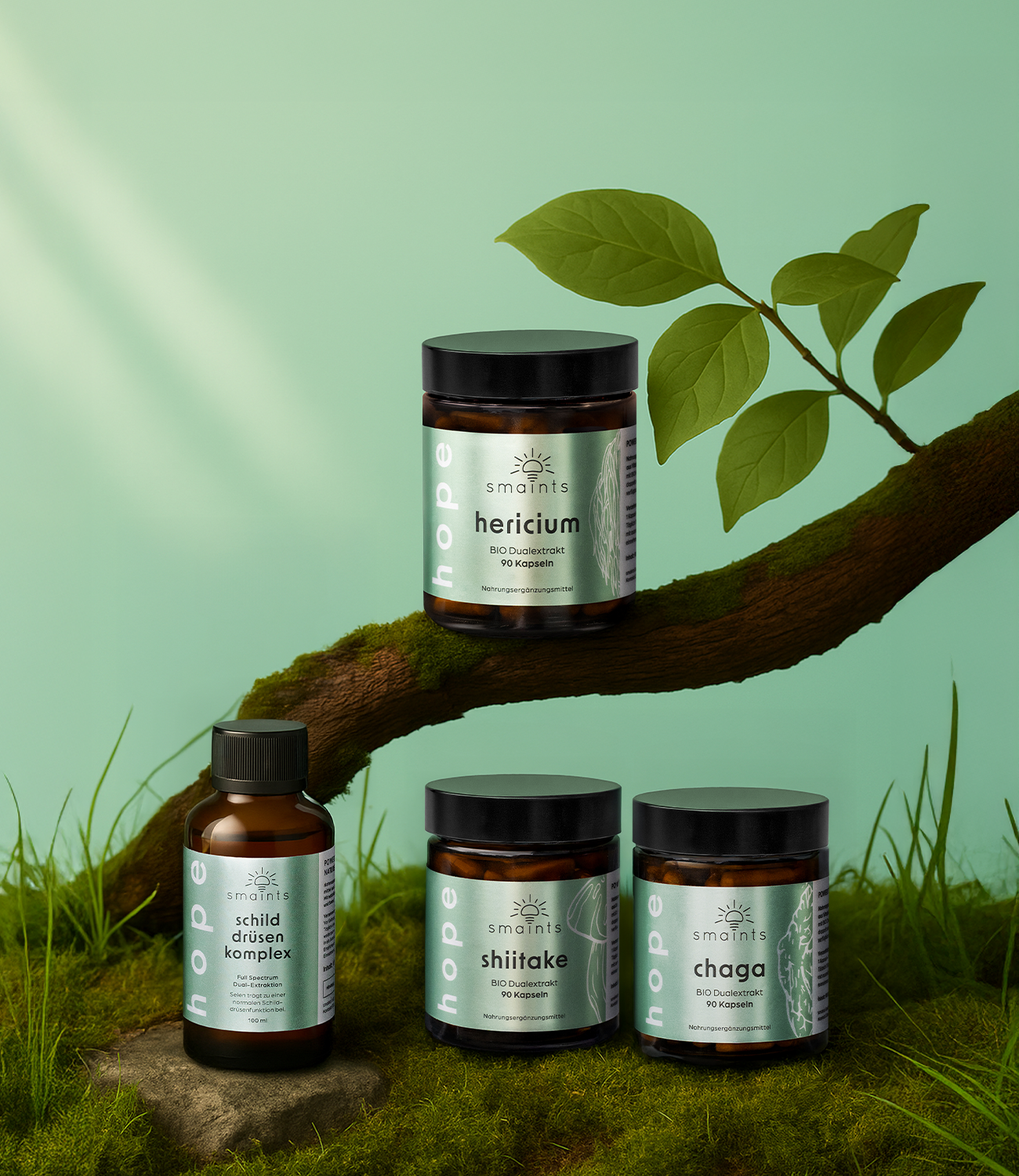
Various medicinal mushrooms are used in mycotherapy to treat respiratory illnesses and allergies in general. In Traditional Chinese Medicine, Cordyceps is particularly valued for asthma, as the mushroom is believed to strengthen the lungs. Scientists have examined this claim more closely. Chinese researchers conducted a study with 60 asthma patients. Half of the patients, as a control group, received standard therapy. The Cordyceps group additionally received Cordyceps capsules for two months. Subsequently, certain inflammatory markers decreased more significantly in the Cordyceps group than in the control group. These results suggest an anti-inflammatory effect of the medicinal mushroom.
Learn more about the effects and uses of Cordyceps .

It has long been known that children raised on farms suffer less frequently from allergies and asthma than children in cities. This is because their immune systems become familiar with many different pathogens at a young age, leading to a well-developed immune response. While a farm holiday is certainly enjoyable for people with asthma, they cannot replicate this natural protection. However, a healthy gut flora has a positive influence on the immune system. If harmful bacteria proliferate in the gut or the diversity of gut bacteria decreases, this weakens the immune system and may even increase the susceptibility to allergies and other illnesses.
One countermeasure is to consume pre- and probiotic foods and follow a low-sugar diet. These foods are good for your gut flora:
Perfume, deodorant, cleaning products, and more can irritate the lungs. The danger lies in the fact that you inhale the spray without realizing it. These products can contain chemical substances that can damage lung tissue over time. For example, if you have asthma and inhale a spray from cleaning products, it can lead to shortness of breath. Therefore, we recommend switching to natural cleaning and personal care products. With vinegar water, neutral cleaners, and similar products, you can keep your home clean without breathing difficulties. Also, ensure good ventilation and wear gloves and a mask when using harsh cleaning agents. Switch from a spray deodorant to a deodorant cream or roll-on.
Great side effect: These products are also better for the environment.
Since some asthma patients also have sensitive skin, they should switch to natural alternatives for all cosmetics. Skin-friendly natural cosmetics are now available in every drugstore or pharmacy.
In naturopathy, various medicinal plants are used to alleviate bronchial asthma. Iceland moss, fennel, ashwagandha, licorice, ribwort plantain, bishop's weed, and others are said to ease breathing and loosen mucus. However, caution is advised, as not every medicinal plant is suitable for asthma. Peppermint essential oil, which is commonly used for coughs, can worsen symptoms. We recommend discussing the use of medicinal plants with your doctor or naturopath. This way, the optimal treatment for your specific symptoms can be determined.
In this country, thyme is a particularly popular home remedy for the natural treatment of asthma. The herb has expectorant properties and relaxes the bronchial muscles. You can use it for inhalation after consulting your doctor. Thyme can be brewed into a tea with water, or you can use it as a spice in your cooking.
Nutrition plays a significant role in managing asthma. A balanced diet provides your body with valuable vitamins and minerals. You should pay particular attention to vitamin D and magnesium. Magnesium relaxes tense bronchial muscles. A vitamin D deficiency is generally associated with an increased risk of asthma. Furthermore, a healthy diet contains many anti-inflammatory and antioxidant substances that are beneficial for asthma. These substances are found, for example, in:
In a French study, researchers observed the eating habits of healthy people and asthmatics. They concluded that a balanced diet could prevent asthma and improve existing asthma.
Sport and asthma are by no means mutually exclusive. On the contrary, regular exercise can even reduce symptoms. Peak flow can gradually increase, and exercise can help reduce stress and raise your individual threshold for experiencing shortness of breath. For those new to exercise, people with severe asthma, or those unsure about using their medication while exercising, joining a pulmonary rehabilitation group is a good option. Otherwise, sports with consistent exertion, such as cycling or swimming, are suitable. In fact, there are virtually no limits to what you can do. These days, asthma can be managed so well that you can participate in almost any sport. Gradually work your way up to more strenuous activities. And of course, you should always have your rescue inhaler with you.
The air, climate, and wind conditions all affect your asthma. Therefore, it's no surprise that many health resorts for asthma patients are located on the North Sea coast or in the mountains. The conditions there are ideal. At the seaside, there's hardly any pollen, the salty air is beneficial for the mucous membranes and loosens mucus. In the mountains, the pollution levels are significantly lower. Here, asthmatics can truly breathe freely.
So make your next vacation part of your natural asthma treatment. The Mediterranean, the invigorating climate of the North Sea, or a trip to the mountains. Pay particular attention to the pollen forecast, especially in the mountains. A vacation allows your lungs to recover and you to truly relax. This, too, improves asthma symptoms.
Asthma is a chronic bronchial condition. Patients must learn to manage the condition in their daily lives. A combination of medication, natural remedies, and these tips can effectively alleviate symptoms. Home remedies include ginger root, cordyceps, medicinal herbs, exercise, and a healthy diet. These are intended to loosen mucus, reduce inflammation, and help prevent asthma attacks. Additionally, restoring a healthy gut flora and a vacation in an ideal climate can be beneficial.

Sources:
https://www.leitlinien.de/themen/asthma/4-auflage
https://www.apotheken-umschau.de/krankheiten-symptome/atemwegserkrankungen/asthma-736647.html
https://pubmed.ncbi.nlm.nih.gov/23065130/
https://pubmed.ncbi.nlm.nih.gov/17972591/
https://www.ndr.de/ratgeber/gesundheit/Putzmittel-Gefahr-fuer-Lunge-und-Haut,putzmittel134.html
https://erj.ersjournals.com/content/52/1/1702572
https://www.aok.de/pk/magazin/sport/fitness/asthma-und-sport-die-lunge-staerken/


Organic functional mushrooms
from Europe

Scientifically developed - tradition meets modernity

Suitable for everyday use & delicious

Independently laboratory tested
in Germany