What makes medicinal mushrooms so unique are their constituents. This is where they differ from other natural remedies such as herbal medicine. But what constituents do medicinal mushrooms contain, and what makes them so special? This article will delve into the chemical aspects.
This article is a guest post by Martin Auerswald. Martin is a biochemist, nutritionist, mycotherapist, runs his own online magazine Schnell.Einfach-Gesund (Quick.Easy-Healthy) , and advises companies in the medicinal mushroom sector.
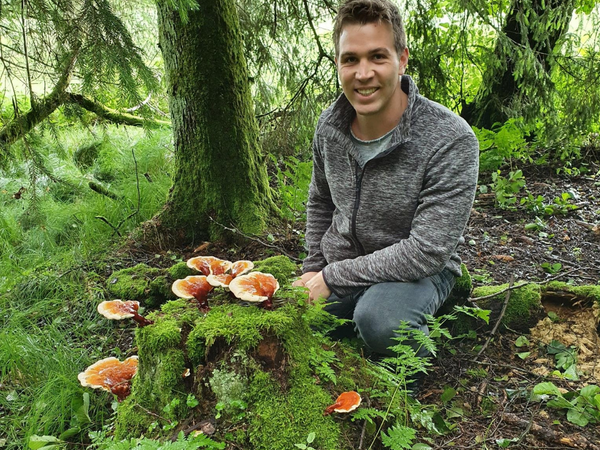
Medicinal mushrooms are becoming increasingly popular and are not only used as dietary supplements but are also widely discussed in functional drinks (e.g., coffee, cocoa). However, it's not a simple trend or "hype" that comes and goes:
Medicinal mushrooms will become established in the long term. This is because the ancient natural knowledge surrounding medicinal mushrooms is becoming more prominent again, and at the same time, thousands of scientific studies are showing what medicinal mushrooms contain and what they can do. Practical experience from recent years also shows who benefits from them and to what extent.
In this respect, medicinal mushrooms differ from "unicorn dust"—we know very precisely which ingredients are contained in which mushrooms and what molecular effects are behind them. Although new ingredients in medicinal mushrooms are discovered every year, we already know enough to say more about them and to deduce potential benefits of a medicinal mushroom based solely on its ingredients.
Fungi form their own kingdom in biology and are not part of the plant kingdom, as is often assumed. They are unique and different from the plants we use for our health.
While plants usually provide nutrients our bodies need – like vitamin C, magnesium, and iron – it's a bit different with mushrooms. Because mushrooms are different:
They form ingredients that we can describe as intelligent. These make our bodies more intelligent, thus supporting them in realizing their natural abilities and potential.
They support our body's natural detoxification processes, digestion, immune system, mental well-being, and even our antioxidant system. They themselves contain antioxidants that are unparalleled in the plant kingdom. They make our bodies more efficient and awaken the vitality and natural abilities that lie dormant within us but have been increasingly forgotten over time.
A major advantage over herbal medicine is that the key ingredients in medicinal mushrooms are processed differently in our liver than those in plants. According to a study by the Spanish Medina Foundation, taking medicinal mushrooms does not cause any interactions or adverse effects when taking other medications at the same time.
Herbal remedies like St. John's wort or turmeric can interact with medications because they are metabolized by the same enzymes in the liver. However, the active ingredients in medicinal mushrooms are metabolized completely differently (by different enzymes), and there is no overlap. Therefore, medicinal mushrooms can generally be taken even when medications are being taken concurrently. (There we are again with the concept of natural intelligence.)
So what are these ingredients? What do they tell us about medicinal mushrooms? A closer look with a chemical microscope provides some answers:
Medicinal mushrooms differ from other mushrooms in that they are said to possess special potency and particular benefits. Furthermore, they are well-researched scientifically, and we know exactly what they contain (and what they don't, such as potential contaminants).
Since fungi in nature are composters (decomposers), meaning they break down and decompose material and act like a kind of natural filter, they can be a double-edged sword:
They can break down and/or accumulate toxins from the soil, making them unique in their ability to cleanse nature and neutralize many of the substances that we humans carelessly release into it. They are therefore called "bioremediators".
However, mushrooms can also enrich the soil with nutrients and supplement them with what they produce themselves. Depending on the type of soil they grow in and the substrates they are given, they can detoxify the soil—and thus act as a reservoir for toxins—or they themselves become a source of valuable nutrients and vital substances that can boost our body's own intelligence.
For use as food or dietary supplements, medicinal mushrooms are cultivated under strictly controlled conditions with an absolutely clean and chemically controlled (pollutant-free) substrate on which they can grow.
The exceptions: Oak hare and chaga are currently not cultivated, but harvested in nature, in parts of Scandinavia and Siberia that are completely untouched by humans.
Therefore, we can rule out the possibility of high-quality products containing harmful substances – however, they do contain a high content of valuable ingredients, which we will now examine more closely:
Below is an overview of the most important ingredients of medicinal mushrooms and what makes them unique. Basically, all medicinal mushrooms contain these ingredients in varying concentrations – however, there are differences, which is what makes each medicinal mushroom unique.
The beta-glucans make medicinal mushrooms unique. Strictly speaking, these are beta-1,3-1,6-glucans, not the more common beta-1,3-glucan found in grains. The latter is known to lower cholesterol levels. This claim is even approved by the EU as a health claim.
Beta-glucan is a dietary fiber that, together with chitin, forms the cell wall in mushrooms – it stabilizes and strengthens the cell wall while still allowing it some flexibility. This is also evident from the fact that beta-glucan is a soluble dietary fiber.
Unlike β-1,3-glucan, the β-1,3-1,6-glucan molecule is significantly larger and more branched. It therefore has an even stronger effect – not only on cholesterol levels, but also on healthy digestion, natural inflammation reduction, and a competent immune system.
Studies have shown that approximately 40% of beta-glucan is absorbed in the intestine and distributed throughout the body via the lymph nodes. There, it trains our immune cells to become more competent.
The quality of a medicinal mushroom extract is also determined by its β-glucan content.
Glycoproteins are β-1,3-1,6-glucans that have bound themselves to proteins, thereby increasing their effectiveness on our immune system. For example, the glycoproteins from medicinal mushrooms are known to make our immune system more robust against pathogens and abnormal cells.
The best-known glycoproteins are probably PSP and PSK from the turkey tail mushroom, which, however, is not approved as food in Europe and therefore may not be sold.
However, every medicinal mushroom actually contains its own glycoproteins, especially since these represent important defense substances against pathogens within the mushroom. In Maitake, for example, a very potent glycoprotein known as Maitake D-fraction is present.
What essential oils are to plants, triterpenes are to medicinal mushrooms. For the mushroom, they are important signaling molecules and messengers – and they unfold a similar potential in our bodies. The more aromatic a mushroom is, the more pronounced its bitter note, the more triterpenes it contains. Cordyceps and Reishi are particularly rich in these compounds; some Reishi extracts contain up to 5-10% pure triterpenes.
Reishi spores are particularly rich in triterpenes - in good products, the spores are also harvested and the right harvest time is awaited, in which the Reishi forms a maximum number of spores.
Chemically speaking, triterpenes are sterols and therefore very potent. Studies have even shown that some of them have a regulatory effect in our cell nucleus, similar to that of vitamin D (a steroid hormone).
Medicinal mushrooms are truly diverse and unique when it comes to triterpenes, due to the wide range of possible chemical modifications. Furthermore, the combination of triterpenes is crucial, resulting in synergistic effects. This is yet another reason to work with the whole mushroom or its extract rather than a single active ingredient.
Reishi alone currently contains over 140 different triterpenes, and new ones are discovered every year – the benefits extend to a wide range of areas, such as antioxidant properties, inflammation reduction, relaxation, detoxification (the more bitter, the better for detoxification), cholesterol reduction, and much more.
Ergosterol is known as pro-vitamin D2. This means it's a form of vitamin D found in mushrooms. Until recently, it was thought that the body couldn't utilize it at all. However, we now know that the liver can convert this pro-vitamin D2 into active vitamin D3. The conversion rate appears to be higher the greater the body's vitamin D requirement (i.e., the current vitamin D deficiency). Overdoses are not known to occur, as the body only absorbs as much as it needs.
Some mushrooms and their extracts are very rich in ergosterol and therefore a potential source of vitamin D for us humans.
Furthermore, in in-vitro studies have shown that ergosterol possesses antitumor and immune-boosting properties.
Ergothioneine was only recently discovered and could become the next big thing among mushroom ingredients. Why? It can bind to heavy metals and help the body eliminate them. Lion's mane, maitake, and almond mushrooms (ABM) appear to contain particularly high levels of it.
Since our bodies are not merely a temporary storage site but a final repository for many environmental toxins (originally released by humans), such as heavy metals, ergothioneine will receive particular attention in the future. This is because the search for natural substances that help us detoxify these environmental toxins is increasing.
Finally, let's look at a class of ingredients that gives medicinal mushrooms (and especially Reishi and Chaga) their vibrant colors: melanins.
Many people know melanin as the skin pigment that makes us tan in the sun and provides natural sun protection. Mushrooms can also produce these substances – by consuming them, our bodies can also benefit, for example, by achieving natural sun protection and general antioxidant benefits.
Melanins are very powerful antioxidants – along with carotenoids, they are among the most powerful antioxidants found in nature. Reishi and Chaga, being veritable melanin powerhouses, could therefore be the foods with the highest ORAC values of all. The ORAC value is a measure of a food's antioxidant content.
Each mushroom contains ingredients in a different quantity and composition, and can therefore be used individually. But what determines the ingredient content?
Medicinal mushrooms are a feast for the senses and a celebration of health! Their constituents demonstrate why they are so unique and valuable. A few classes of compounds stand out time and again, such as beta-glucans, triterpenes, and ergosterol.
When all the good things come together, they are among the most valuable natural substances for health, about which we will hear and learn much more in the coming years.


Organic functional mushrooms
from Europe

Scientifically developed - tradition meets modernity

Suitable for everyday use & delicious

Independently laboratory tested
in Germany