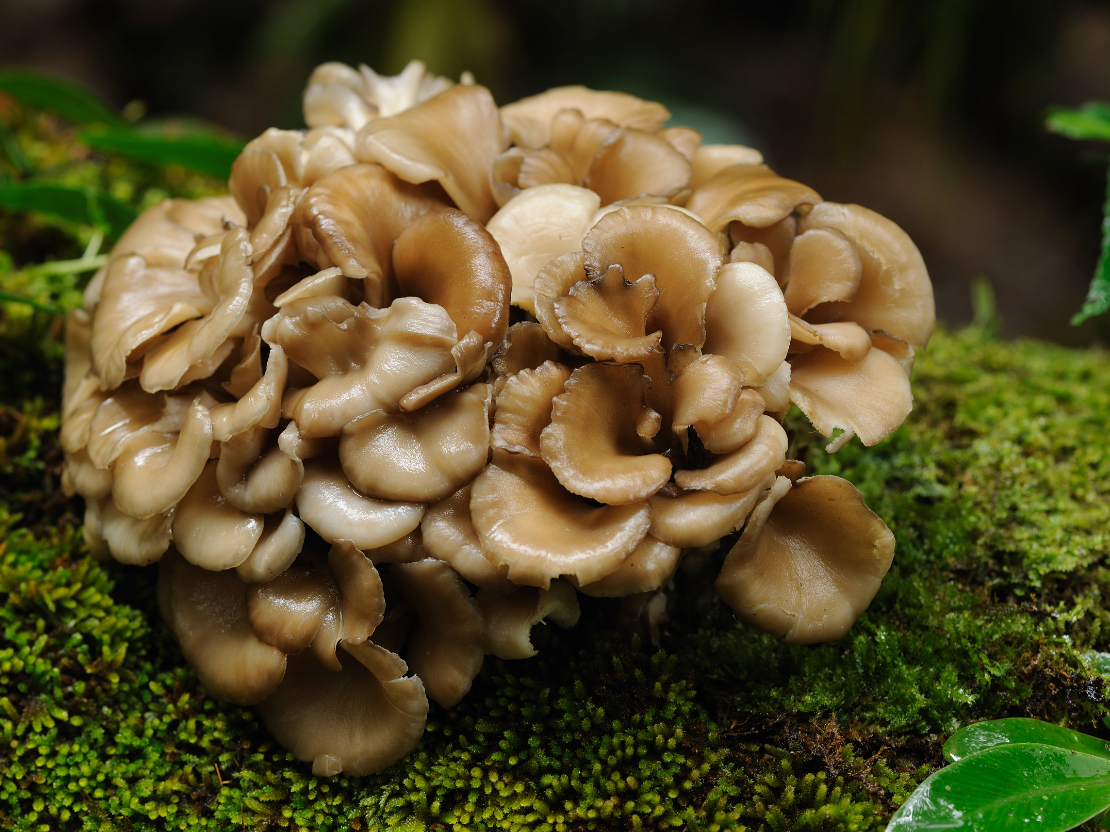
Maitake is also known as the dancing mushroom. Can the mushroom actually dance? Probably not, but it can certainly lift your spirits and make you want to dance. Find out how here: Maitake Effects & Uses.
In Japan and traditional Chinese medicine, people have long valued maitake mushrooms. They use them for general strengthening, weight loss, lowering blood sugar, and stress relief. Initial scientific studies have examined this traditional knowledge. Research on the mushroom continues, as current findings are primarily based on cell and animal studies. Human studies that meet medical standards are scarce. Therefore, the EFSA (European Food Safety Authority) currently does not permit any health claims that can be used for advertising purposes. Our statements regarding its effects are thus based directly on studies.
The composition of the medicinal mushroom is already relatively well understood. A large portion of its substances are not new, as they are also found in other mushrooms or plants. These are the ingredients contained in Maitake:
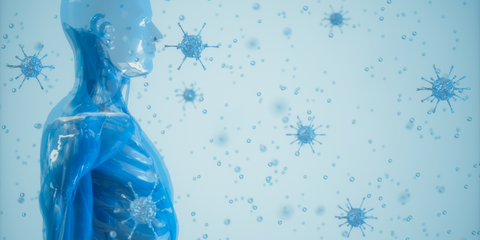
Some medicinal mushrooms are described as immunomodulators, meaning they influence our immune system. Previous studies have suggested this property is also present in Maitake mushrooms. In a cell study, the use of polysaccharides from Maitake showed activation of both the acquired and innate immune systems. Researchers conclude from these studies that the D-fraction polysaccharides, in particular, could offer protection against pathogens and infectious diseases.
Detailed studies have been conducted on potential protection against specific viruses and bacteria:
In addition to the polysaccharides, the high content of the vitamin D precursor is also of interest for the immune system, as vitamin D is needed for a strong immune system.
The maitake mushroom is believed to have a positive effect on allergies due to its immunomodulatory properties. In one study , mice were given a maitake extract and ergosterol. The effect on allergic skin reactions was then tested. The result: the reaction of mast cells was suppressed. This suggests that maitake and the vitamin precursor may reduce type 1 allergic reactions. The scientists predict that maitake, as a functional food, could potentially help prevent allergic diseases in the future.
Type 2 diabetes is a widespread disease. In this condition, sugar metabolism is impaired. Insufficient insulin can be produced, or the body's cells no longer respond to it. Sugar from food remains in the bloodstream and, in the long run, damages health. Maitake mushrooms are now being touted as stabilizing blood sugar levels and improving glucose tolerance . Both of these effects are currently only known from animal studies. Nevertheless, experts see great potential for the mushroom in the treatment of diabetes. Its influence on the gut flora could be responsible for the effect on blood sugar levels.
Osteoporosis is a consequence of impaired bone metabolism. Patients are advised to pay attention to their calcium and vitamin D intake to support bone-building processes in the body. Since vitamin D is found in only a few foods, maitake mushrooms, with their high content of this vitamin precursor, can be beneficial. A scientific publication highlights the bone mineralization benefits of maitake.
The maitake mushroom may also influence the regulation of lipid metabolism and blood pressure. In one experiment , the triglyceride, cholesterol, and phospholipid levels of test animals that received maitake improved by 30-80 percent compared to the control group. Another study in an animal model showed a protective effect against high blood pressure.
Many of these metabolic disorders are increasingly becoming a major problem in our society. Along with other preventative measures such as a balanced diet, exercise, and stress management, the maitake mushroom could contribute to a reduction in these lifestyle diseases.
It's perfectly normal for free radicals to be produced in the body. However, these can damage cells, so free radical scavengers are needed to reduce their potential danger. Antioxidants are precisely such free radical scavengers and are found in various foods. Fresh fruits and vegetables are typically rich in antioxidants. They are also present in mushrooms and maitake mushrooms. These antioxidant properties are so significant that researchers believe it makes sense to use maitake extract in cosmetic products to reduce skin damage caused by UV radiation.
In a cell culture experiment using immune effector cells of the central nervous system (microglia), scientists tested the anti-inflammatory effects of maitkake mushrooms and a compound derived from the mushroom. They observed a reduction in inflammatory responses and were able to partially elucidate the underlying biochemical pathway.
In the US and Japan, a medication derived from the maitake mushroom is approved and used as an adjunct to cancer therapy. However, this is not the case in Germany, and consumer protection agencies strongly advise against its use as the sole treatment for cancer, as there is a lack of conclusive clinical studies. While existing research is promising, it has only been conducted on cells or animals.
The antitumor effects of the maitake mushroom were first described in 1982. Since then, an increasing number of studies have shown positive effects when used alongside conventional therapy for breast, liver, bone, and stomach cancer, as well as leukemia. Such adjunctive treatment should always be discussed with a physician, as interactions between the mushroom and medication are possible.
Few studies have investigated the connection between well-being and maitake mushrooms. However, a study by Bao et al. examined a possible antidepressant effect in mice. The animals received maitake for either one day or five days. Various behavioral tests showed an improvement in depression. However, these results cannot be directly extrapolated to humans. If you experience symptoms of depression, you should seek professional help. Maitake mushrooms can then be used in consultation with a doctor or therapist.
As previously described, maitake contains the precursor to vitamin D, and this vitamin plays a role in regulating serotonin (the "happiness hormone") . A deficiency can therefore lower mood. In such a case, maitake could be a helpful way to meet your vitamin D needs.

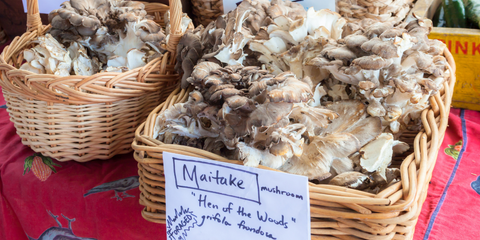
The maitake mushroom is primarily known in Japan, where it is used both in cooking and in traditional (Chinese) medicine. The name maitake also originates from Japan and translates as "dancing mushroom," likely because its striking shape is reminiscent of dancing nymphs. Another explanation for the name stems from the great joy associated with finding a maitake mushroom, as it is rarely found in nature. This rarity gave the mushroom a value comparable to silver in earlier times.
In science, Grifola frondosa is the common name for this medicinal mushroom . Grifola is derived from the Greek word for griffin, and frondosa is Latin for 'leafy'. In German, the mushroom is sometimes called 'gemeiner Klapperschwamm' (common rattlesnake mushroom) because the caps snap shut when the fruiting body is shaken.
Since around the 1980s, the maitake mushroom has been cultivated on a large scale. Previously, it was rare and highly prized. Its distribution ranges from the subtropics to the northern temperate zone. Once a maitake mushroom has been found, it's worth noting the location, as it often reappears in the same spot. This is usually at the base of a very old, diseased, or even dead oak tree. Occasionally, the mushroom also uses a linden, chestnut, or beech tree as a host. Because modern forestry practices remove dead wood from the forest, the maitake mushroom is becoming increasingly rare in the wild.
Maitake mushrooms are more popular than ever. On the one hand, they are increasingly used in Asian dishes, and on the other hand, they are an ingredient in some dietary supplements. In both cases, the maitake mushrooms are cultivated.
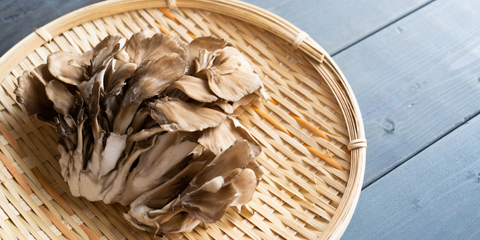
Want to experience the effects of Grifola frondosa (Maitake)? Then various dietary supplements are available. However, choosing the right one isn't easy, as the products aren't immediately comparable. We've summarized what you should consider when buying Maitake mushrooms:
Traditionally, the mushrooms are dried for treatment and then ground into a powder. This powder can then be packaged in capsules for easy use. However, there are also extracts in which the active ingredients are extracted from the mushroom and are present in a higher concentration. For example, an aqueous extraction is comparable to a tea.
Besides dosage, a product's bioavailability is crucial for its effectiveness. Good bioavailability means the body can easily absorb the active ingredients, and they enter the bloodstream in large quantities unchanged. With poor bioavailability, the active ingredients are excreted or broken down before reaching their target. Extracts are generally more bioavailable than powders, but this isn't always the case. There are high-quality powders and inferior extracts. So, what should you look for?
Maitake mushrooms are generally considered a very safe food or dietary supplement. However, as with any food, allergic reactions can occur after consumption. If you already suffer from multiple allergies, you should test the mushroom carefully and in small doses.
In a study on maitake, patients reported mild nausea, joint swelling, and rashes, which may be related to the extract. Furthermore, the otherwise positive effects, such as lowering blood pressure or blood sugar levels, can be considered undesirable side effects in some individuals. Therefore, consultation with a doctor is necessary when taking maitake if you have these metabolic disorders. Otherwise, blood sugar or blood pressure could drop too low.
Interactions with warfarin (a blood thinner) are possible. If you are taking this medication, we advise against using maitake. If you still wish to use the mushroom, please consult your doctor. The dosage may need to be adjusted.
There is currently no uniform recommendation for the dosage of maitake. The dosage can vary depending on the product and manufacturer. Manufacturers often advise dividing the daily dose into several portions to improve tolerability. Our recommendation: Follow the instructions on the packaging of reputable manufacturers. Also, ensure you maintain a healthy diet, exercise, and get enough sleep, as these cannot be replaced by any dietary supplement.
Mushrooms filter their environment, so harmful substances can quickly accumulate in them. Furthermore, mold can develop if they are stored improperly. To avoid this, you should opt for Maitake mushrooms from the EU, as there are strict guidelines and hygiene protocols in place. Quality testing from an independent laboratory provides additional peace of mind.
Our quick check for good quality mushroom products:
The effects of the maitake mushroom cannot always be definitively proven, as previous studies have primarily been conducted in laboratories using cells or animals. Clinical trials in humans are scarce. However, the findings from these studies suggest positive effects in the following areas of application:
Various active substances, such as polysaccharides, beta-glucan, and the D-fraction, are thought to be responsible for the effects. However, the exact metabolic pathways are not always fully understood.
Maitake is Japanese and means 'dancing mushroom'. It is used there as an edible mushroom and in traditional medicine. Maitake mushrooms do grow in our region, but they are very rare. Therefore, the mushrooms and products available commercially are predominantly cultivated.
If you wish to take maitake mushrooms as a dietary supplement for your health, you should ensure high quality and follow the manufacturer's dosage instructions. Keep in mind that maitake can never replace medical treatment, but should always be a supplement to your diet.
Do you find medicinal mushrooms an interesting topic? Then check out our other blog posts. Click here to go to the blog.
Sources:
https://www.ernaehrungs-umschau.de/print-artikel/13-06-2018-nahrungsergaenzungsmittel-aus-pilzen/
https://www.thieme.de/produktdetails/9783830494416_musterseite_81_88.pdf
https://pubmed.ncbi.nlm.nih.gov/15298759/
https://link.springer.com/article/10.1007/BF02463941
https://pubmed.ncbi.nlm.nih.gov/27083830/
https://pubmed.ncbi.nlm.nih.gov/17475344/
https://www.sciencedirect.com/science/article/pii/S0021519819302501
https://pubmed.ncbi.nlm.nih.gov/12236580/
https://pubmed.ncbi.nlm.nih.gov/11349892/
https://pubmed.ncbi.nlm.nih.gov/9255420/
https://www.mdpi.com/2304-8158/10/1/95/htm#B1-foods-10-00095
https://www.mdpi.com/1999-4923/13/6/806/htm
https://www.ncbi.nlm.nih.gov/pmc/articles/PMC7091544/
https://pubs.rsc.org/en/content/articlelanding/2022/fo/d1fo04062f/unauth
https://www.ncbi.nlm.nih.gov/pmc/articles/PMC6130584/
https://academic.oup.com/bbb/article/83/12/2280/6044149?login=false

Beantworte 6 kurze Fragen zu deinen Zielen und deinem Alltag.


Organic functional mushrooms
from Europe

Scientifically developed - tradition meets modernity

Suitable for everyday use & delicious

Independently laboratory tested
in Germany