
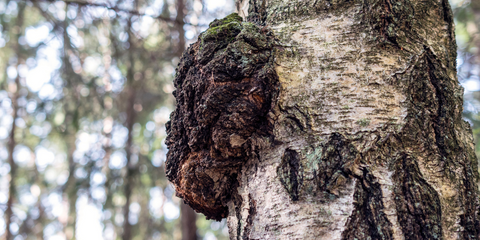
The chaga mushroom is extremely robust against cold. It thrives on birch trees in Scandinavia and withstands the harsh conditions there. Wouldn't it be great if the mushroom could pass these qualities on to you? For example, with chaga tea. But how do you prepare chaga tea? Learn everything you need to know about the tea and how to brew it here.
Chaga (Inonotus obliquus, birch polypore) is one of the most popular medicinal mushrooms. But how did this come about? Actually, chaga isn't a new discovery. The mushroom has been used in natural medicine since the 12th century. However, thanks to new findings in scientific research and the increasing popularity of natural methods, chaga is experiencing a well-deserved comeback. We've analyzed the current state of research for you in a comprehensive, separate blog article: Chaga Mushroom: Effects and Uses
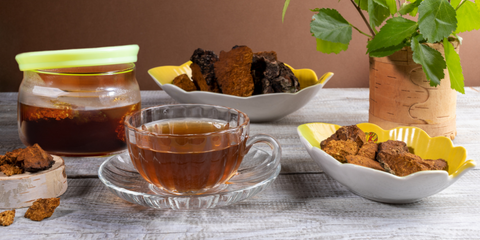
Various herbal teas can probably be found in every kitchen cupboard as home remedies for sore throats, coughs, stomach aches, and more. In our opinion, chaga should also be included as a natural remedy. However, the preparation is a little different than simply steeping a tea bag. We'll show you how to brew a tea from chaga chunks without destroying its beneficial properties.
For 2 cups of mushroom tea you will need:
5 grams of chaga chunks and 500 ml of water
or for example: 10 grams of chaga chunks and 1,000 ml of water
Aside from that:
1 pot
1 sieve or spoon
2 cups or tea glasses
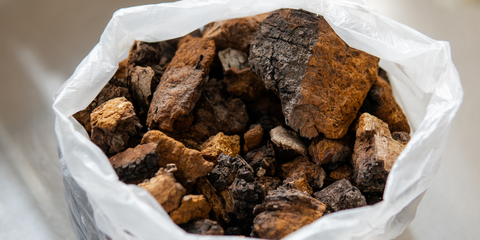
Tip 1 : You can reuse the chaga chunks multiple times, even up to 10 times. If necessary, cut the chunk into smaller pieces before the next use to extract more of the mushroom's beneficial properties. Once the chaga pieces no longer release color into the water, no more active ingredients will be released. At that point, you should use a new chaga chunk.
Tip 2 : The best way to store used chaga is in a little water in the refrigerator. If you want to reuse the pieces, add the water to the pot and cut the mushroom into smaller pieces. Then prepare as usual.
Proper storage of dried chaga pieces: Mold develops when moisture is trapped. Therefore, you should store the mushroom in a dry place and in breathable packaging. Airtight plastic containers and tins are unsuitable for long-term storage. The products are usually packaged in paper bags, similar to other teas. This is also the ideal packaging for home storage.
Tip 3 : Chaga tea has a long shelf life. You can prepare a larger quantity at once, store it in a carafe in the refrigerator for two to three days, and then warm it up or drink it cold as needed.
Tip 4 : While chaga tea doesn't have a typical mushroom flavor, its taste is still somewhat unusual. To make it a delicious drink nonetheless, you can enhance it. These ingredients work well in chaga tea:
Honey
Spices such as cinnamon or chai spice powder
Chaga mushroom has a slightly vanilla-like flavor; adding vanilla extract will accentuate this note.
Chaga tea and frothed milk go perfectly together to make a delicious Chaga Latte.
A splash of lemon juice
Add the ginger during the last few minutes of cooking.
1 tsp apple cider vinegar
Ice cubes for a cool treat in summer
Tip 5 : Not all water is created equal: Depending on how soft or hard your tap water is at home, it can affect the taste. We therefore recommend filtering it beforehand if you have very hard water. This can make a big difference in the flavor. By the way, this applies not only to chaga tea, but also to other teas and coffee.
Does your body need a reset? Do you want to prepare optimally for cold and flu season? Or perhaps wean yourself off coffee? Then a course of treatment with the Chaga mushroom is just what you need. Drink 1-2 cups of Chaga tea daily for several months. A typical Chaga course lasts between six weeks and six months. 100 grams of Chaga chunks will last you for about six months if you use them repeatedly, making them very economical.
During this time, you benefit from the ingredients. Antioxidants, for example, protect your cells from free radicals. Furthermore, the chaga mushroom contains polysaccharides, triterpenes, phytochemicals, minerals, and vitamins that benefit your body. Another advantage of the chaga regimen is that you take a little time out each day. Preparing the tea gives you about 15-20 minutes to relax. Use this time for breathing exercises, yoga, or to read a book. This short break can work wonders and lower your stress level. And this, in turn, has a positive effect on your immune system, because chronic stress weakens your defenses.
Incidentally, preparing tea from mushrooms is the traditional method for using medicinal mushrooms. Simple powder is often advertised as a natural preparation of mushrooms, but grinding dried mushrooms is relatively new. Traditionally, mushrooms are always cooked or fried and never eaten raw. This has a good reason, as it increases bioavailability. So don't be afraid of heating the mushrooms.
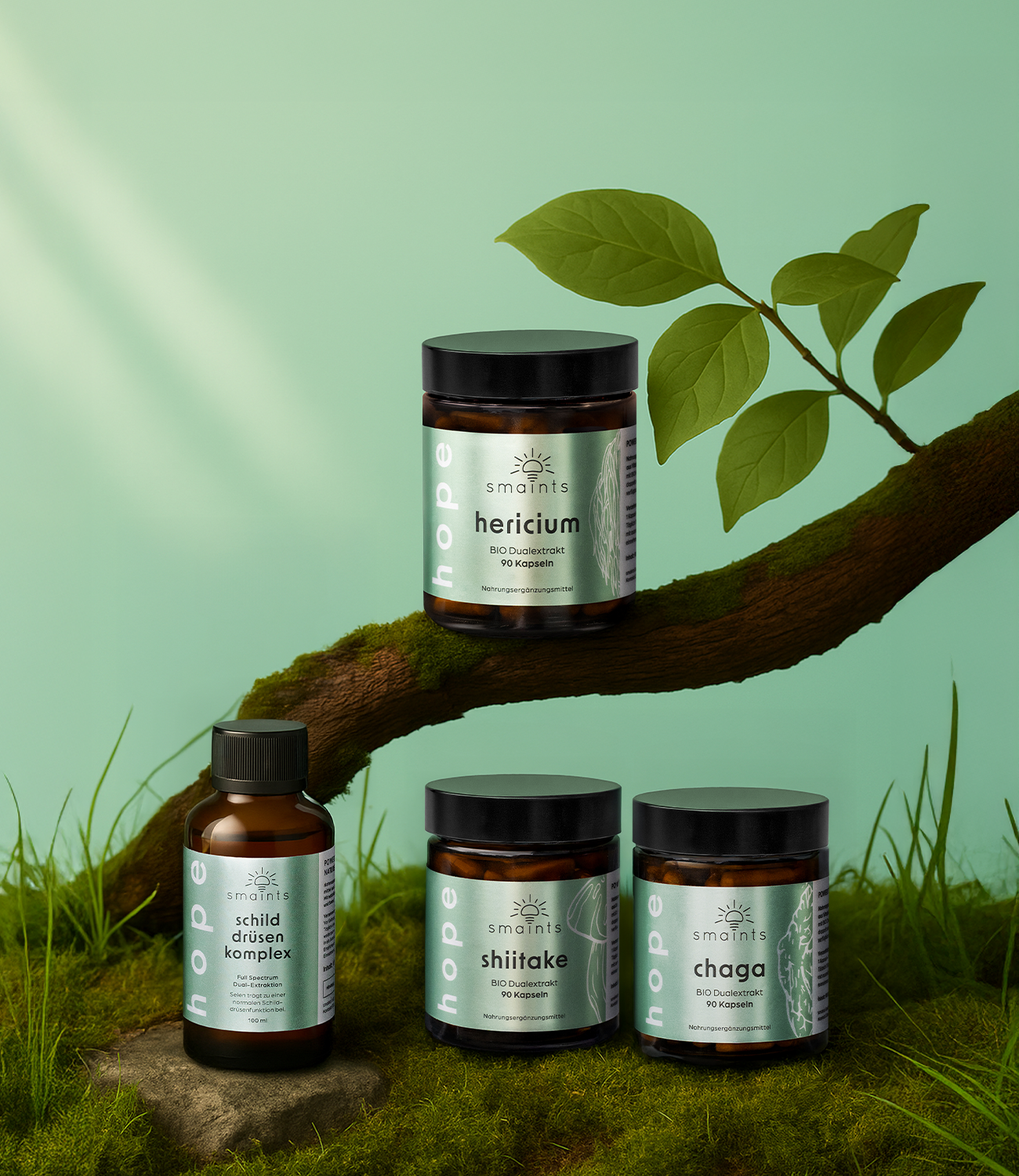
Chaga tea is a great way to incorporate this medicinal mushroom into your daily routine, especially if you already enjoy tea. However, waiting 15 minutes isn't always possible. Perhaps a different preparation method for chaga would fit much better into your day.
Since chaga mushrooms are currently very popular, there are many different products available, some of which vary considerably in quality. We generally advise against very cheap products and those from disreputable manufacturers. If the mushrooms are not dried or stored correctly, mold can develop, which is harmful to your health. You'll notice this as a dominant bitter note in your tea. However, bitterness can also indicate low mushroom quality. If chaga grows on very old or even dead birch trees, bitter compounds will develop. A high-quality chaga mushroom has a mild, earthy, slightly vanilla-like flavor reminiscent of wood.
Chaga is sold under various names. If the package says Chaga, Tschaga, Schieferporling, or Inonotus obliquus, then you have the correct mushroom. This type cannot be cultivated to the same potency. Therefore, look for wild-harvested Chaga. It takes several years, even decades, for a Chaga mushroom to reach maturity and potency. Cultivated mushrooms don't live as long, grow on substrates instead of birch trees, and this affects their nutritional profile. Chaga from mushroom farms differs significantly in its composition from wild mushrooms. Therefore, our recommendation is: buy wild-harvested Chaga, ideally from organic and sustainable sources!
Pay attention to the origin as well. Chaga mushrooms do grow in northern Germany, but they are exposed to very different conditions there. The milder climate means there's no need for the formation of certain secondary plant compounds. For a good tea, we therefore recommend chaga mushrooms from as far north as possible – ideally from Scandinavia. Ideally, the chaga chunks should come from regions around or above the Arctic Circle. Incidentally, even when harvesting from the wild, it's important to ensure sustainable forest management. Our chaga chunks from smaints come from organically managed forests in Finnish Lapland. The trees are at least five years old, and the mushroom grows at least one meter above the ground. We exclusively use chaga that has grown on living birch trees. For you, this means the best quality and potency for your tea.
The chaga mushroom (Inonotus obliquus) is enjoying renewed popularity and is considered a European superfood, although it has long been used in naturopathy. It is said to support the immune system, gut health, and blood sugar stability through various ingredients such as triterpenes. Preparing the tea is relatively simple. Heat chaga pieces with water in a pot for 15 minutes or longer (do not boil) and then strain through a sieve. The tea can be customized with various flavorings such as spices, honey, milk, and more. Other forms of administration or preparation of chaga are also possible. With ourliquid extract, for example, you benefit from a full spectrum of ingredients and even higher bioavailability.
A Chaga tea regimen over several weeks or months allows your body to experience a gentle reboot. This new routine gives you time to unwind and treat yourself to a soothing tea every day. To ensure you receive a truly high-quality product, there are a few things to consider when purchasing. Wild harvesting from northern Scandinavia, use of living birch trees, and other factors are important.
Sources:
https://www.usz.ch/wie-stress-unser-immunsystem-beeinflusst/
https://pubmed.ncbi.nlm.nih.gov/27865960/
https://schnelleinfachgesund.de/chaga-tee/
https://schnelleinfachgesund.de/chaga-pilz-lebenselixier/
https://examine.com/supplements/chaga/
https://ihre-heilpraktiker.berlin/wp-content/uploads/2019/02/Chaga-Tee-zubereiten.pdf
https://theartofraw.at/die-qualitaet-von-chaga-pilzen-beurteilen/

29,99 €

Large Chaga mushroom chunks (up to 5 cm) from wild harvest in Lapland (Finland), certified organic
For preparing Chaga tea – simply bring to a boil. Preparation instructions and tips can be found on the packaging.
100 g pack – for at least 1 to 6 months. Highly economical, as the chunks can be reused up to 10 times.
Organic quality from Europe – independently lab-tested and certified in Germany
Free from alcohol, sugar, caffeine, and other unnecessary ingredients – suitable for every lifestyle

Organic functional mushrooms
from Europe

Scientifically developed - tradition meets modernity

Suitable for everyday use & delicious

Independently laboratory tested
in Germany